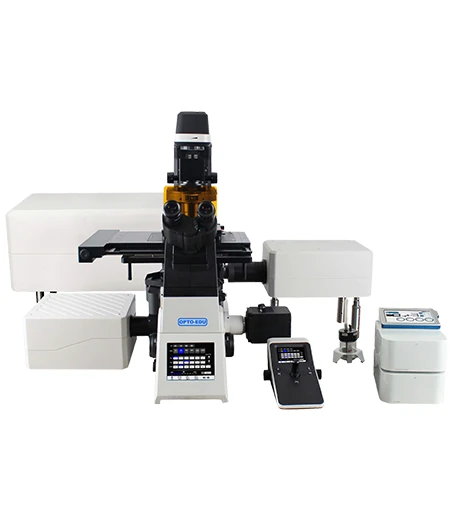
Set out the acquisition sequence
The model page describes combined X, Y, Z, wavelength, and time scanning. Listed acquisition functions include multichannel fluorescence imaging, time-lapse scanning, multiposition acquisition, Z stacks, and panoramic stitching. Explain which functions need to run together and what images or data you need to retain.
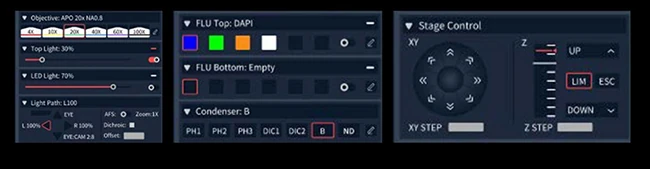
Motorized components named in the feature list include the nosepiece, XYZ movement, condenser, and fluorescence turret. Ask how those components are controlled during your sequence and which settings can be recalled between acquisitions.
The source also discusses array detection and resonant scanning. Request the exact detector configuration and available scanning settings for your sample. Keep the detector selection, software functions, and microscope components visible as separate configuration items so the proposed system can be evaluated against the task.
Published configuration information
| Configuration area | Published information |
|---|---|
| Model designation | A64.1020 NIR Laser Confocal Microscope |
| Scanning technology described | Resonant scanning |
| Acquisition coordinates | X, Y, Z, wavelength, and time combinations |
| Acquisition functions | Multichannel, time-lapse, multiposition, Z stack, panoramic stitching |
| Motorized components listed | Nosepiece, XYZ movement, condenser, fluorescence turret |
| Operator interface | 5.7-inch touch screen listed |
| Detection | PMT and array-detector configurations discussed; offered arrangement requires confirmation |
Request a model-specific laser and detection-channel table, with the selected wavelength ranges and supplied options clearly identified.
Specify the channels before selecting the system
List each fluorophore or signal you intend to acquire and the required detection range. Note whether signals need sequential or combined acquisition. Ask for the corresponding laser lines, filters, and detector arrangement in the offer rather than choosing a system by channel count alone.
For a time series or Z stack, describe the specimen, vessel, observation area, and interval you need. Include any environmental-control requirement as an item for review. Request the objectives, stage arrangement, acquisition software, storage, and workstation details for the offered configuration.
If a performance test is part of your purchasing process, define the sample and acceptance conditions with your laboratory. Ask which demonstration images or configuration documents can be supplied for review. Include quantity, destination, and installation requirements when requesting commercial terms.
Review the model in context
For another confocal configuration, review A64.1010. Compare the written laser and detector arrangements for each model within the confocal microscope category.
A64.1020 questions
Which laser lines are included?
Request the exact supplied laser lines and their associated detection ranges. The page uses the NIR model designation and discusses several detection arrangements; the quotation should identify the selected channel configuration explicitly.
Can acquisition modes be combined?
The source describes combined X, Y, Z, wavelength, and time functions, including stacks, time series, and multiple positions. State the sequence you need and ask which software functions and motorized components support it in the offered setup.
What detector information should I request?
Ask for the detector type, channel count, wavelength range, and any options included. Link these choices to the signals you need to capture and request the configuration sheet alongside the microscope, software, and workstation list.
Discuss the A64.1020 configuration
Send the model number and the specification requirements for your project. Ask OPTOEDU for an itemized configuration.
Reference: published A64.1020 product description.