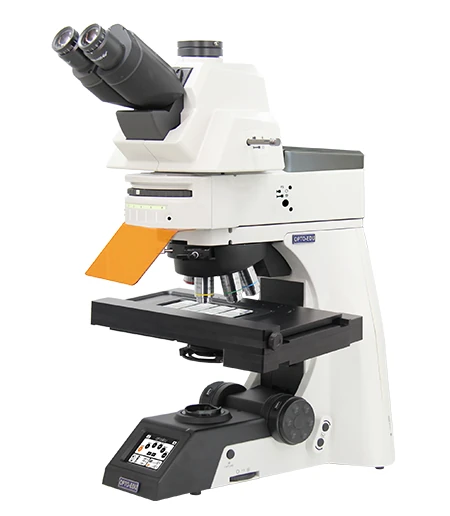
Review the upright imaging configuration
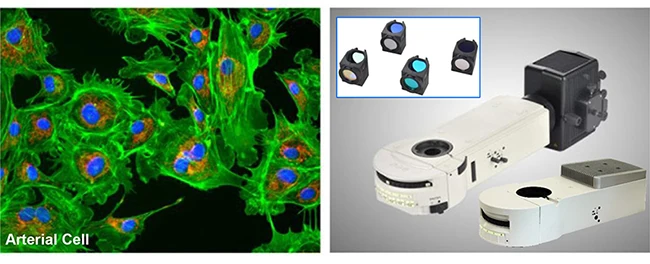
The epi-fluorescence illuminator is described with a six-position turret disc. The source lists B, G, UV, and V fluorescence filters and describes either a 100W HBO mercury source or LED lighting. State your required excitation and observation arrangements. Ask which source and filter positions appear in the proposed bill of materials; alternative light sources should stay separate in the quotation.
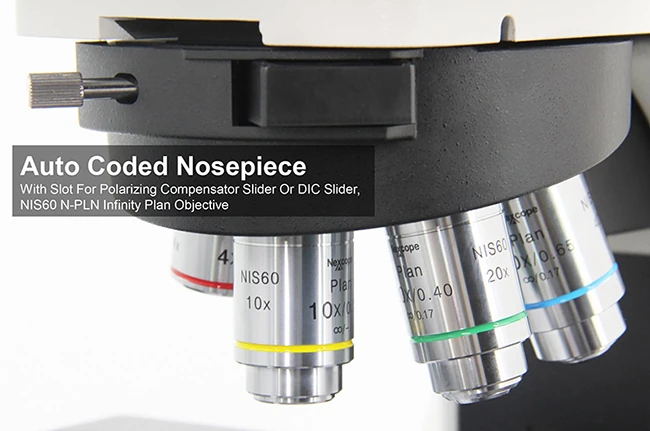
The automatic coded nosepiece is described with a slot for a polarizing compensator slider or DIC slider. A slot alone does not establish that either slider is included. Identify the observation methods you intend to use and ask for the corresponding components and objective combinations.
Motorized XYZ stage control is paired with a control rocker. The detail description also identifies independent hand-wheel buttons, selectable focusing speeds, and objective conversion during binocular observation. Consider who will operate the microscope and which controls need to be within reach. Request the operating layout alongside the component list.
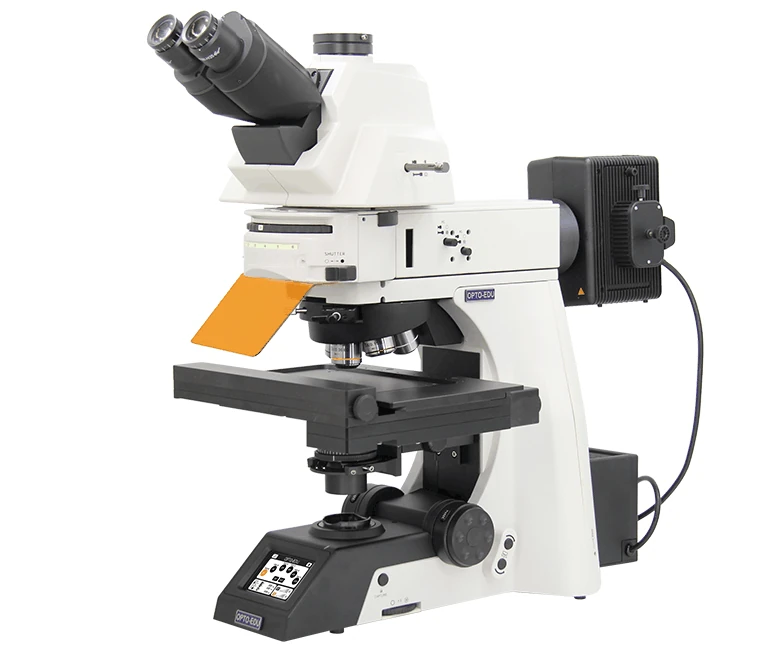
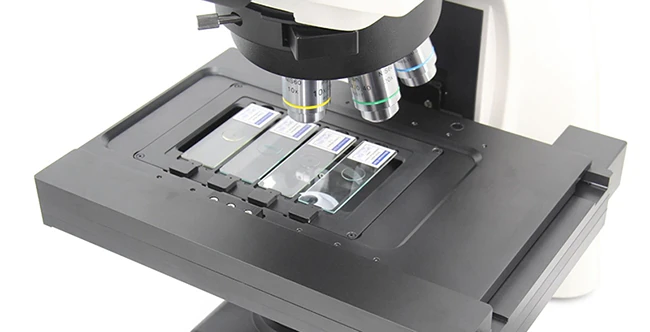
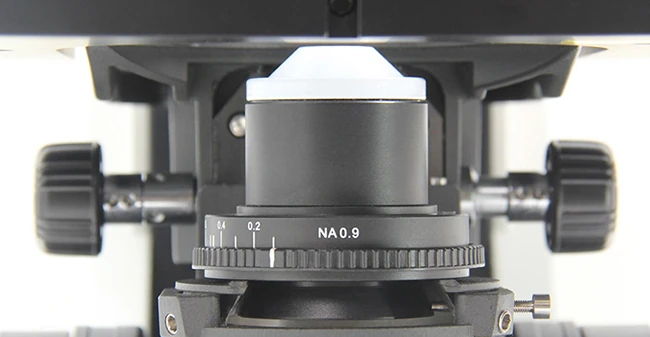
Published A16.1095 configuration
| Item | Published description |
|---|---|
| Microscope layout | Upright fluorescence microscope |
| Stage control | Motorized XYZ with control stick |
| Stage travel range | 125 × 75mm |
| Nosepiece | Automatic, six positions |
| Listed objective magnifications | 4x, 10x, 20x, 40x, 100x |
| Epi-fluorescence source | 100W HBO mercury or LED |
| Transmitted illumination | 3W SLED or optional 24V 100W halogen |
| Swing-out condenser | NA 0.9/0.25 |
These fields summarize the model's published text. Confirm the supplied objective set, filter arrangement, light source, and optional components for your order.
Prepare your laboratory requirements
Describe your specimen preparation, how the sample is held, and the observation modes needed for each task. If several users share the instrument, explain how they expect to change objectives, move the stage, and adjust illumination. These are selection questions, rather than a claim that an unreviewed method or accessory is compatible.
Keep imaging and control requirements explicit. Ask whether your quotation includes a camera, computer, software, connection accessories, and training materials. Name any equipment you already own before requesting compatibility advice. Request the exact components proposed for integration instead of assuming that a product photograph shows the complete delivery scope.
For procurement, include the destination, quantity, and required documentation. Ask for current price, availability, and shipping information with the selected configuration.
Compare the observation layout
Browse motorized fluorescence microscopes to review the available listings. If your task calls for an inverted layout, compare the separately documented A16.1099 inverted fluorescence microscope. Check its own objectives and control arrangement rather than transferring specifications between the models.
A16.1095 questions
Are the mercury and LED fluorescence sources both included?
The source presents mercury and LED alternatives. Ask which light source is quoted and which filters accompany it. List the observation requirements that matter to your specimens so the proposed configuration can be reviewed on that basis.
Does the slider slot include a DIC system?
The model description identifies a slot for a polarizing compensator or DIC slider. Confirm the actual slider, objectives, and associated optical components in writing. The presence of a slot is a starting point for configuration review.
What should I confirm about stage operation?
Review the published travel range, motorized axes, control stick, and focusing controls against your specimen holder and working method. Ask how the supplied controls are arranged and whether the chosen accessories affect sample access.
Ask about A16.1095
Send your observation modes and component requirements. Request the current A16.1095 configuration.
Reference: published A16.1095 product description.